Introduction
Saudi Arabia’s real estate sector is undergoing a historic shift. Driven by Vision 2030, master communities, high-density residential developments, and commercial gigaprojects are reshaping the Kingdom’s urban landscape. From ROSHN’s expansive residential districts in Riyadh to luxury coastal hubs along the Red Sea, managing a modern property portfolio requires cutting-edge technology.
For real estate executives, old operational methods are no longer sufficient. Relying on disconnected tools or manual tracking creates severe compliance risks under the Real Estate General Authority (REGA), leads to delays in maintenance, and lowers occupant satisfaction.
To scale your portfolio efficiently, implementing a specialized community management software in Saudi Arabia (KSA) is a vital strategic requirement.
This comprehensive guide shows B2B real estate leaders how to evaluate enterprise platforms, protect asset value, and ensure total compliance with the Kingdom’s strict regulatory framework.
Why Traditional Systems Fail Saudi Master Communities
Many property operations across the Kingdom still rely on fragmented tools—using text apps for tenant requests, separate spreadsheets for tracking fees, and isolated maintenance systems.
This disconnected setup creates critical operational blind spots for leadership teams:
- For Centre Heads and Property Managers: A lack of centralized portfolio data makes it impossible to forecast asset lifecycles, monitor collection rates, or track overall community performance across multiple regions.
- For Facility and Admin Heads: Maintenance tickets get lost in chaotic email threads. This causes significant delays in response times, reduces vendor accountability, and lowers tenant retention rates.
- For IT Heads: Managing standalone, disconnected software solutions increases cybersecurity vulnerabilities, complicates data compliance, and inflates annual software maintenance costs.
Core Features of Enterprise Community Management Software in KSA
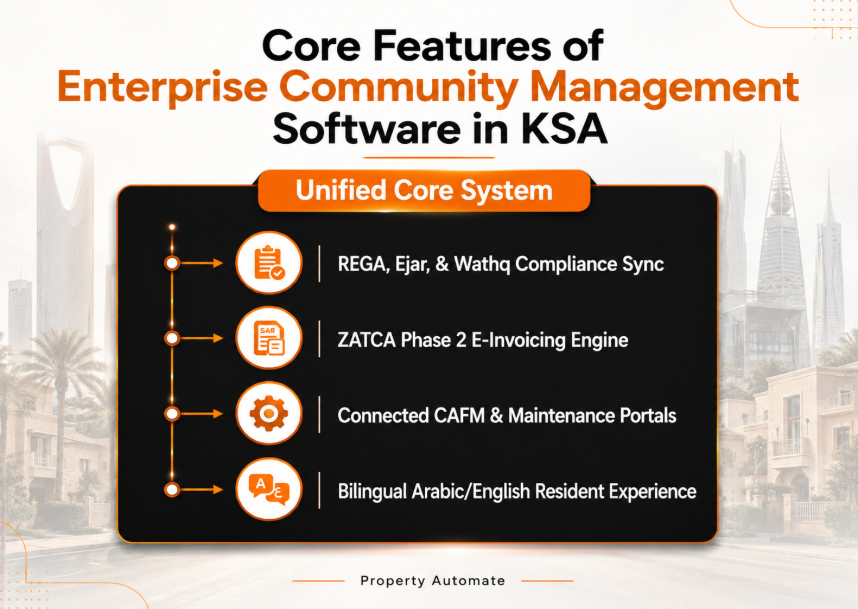
An enterprise-grade community management software platform built for the Saudi market must serve as a single, centralised system connecting your executive backend, on-site service teams, and residents.
1. Comprehensive Regulatory and Compliance Integration
Operating in Saudi Arabia requires software that integrates natively with the Kingdom’s digital governance platforms. Your chosen software must connect with:
- REGA Frameworks: Meeting mandatory licensing guidelines for property management operators.
- Ejar Integration: Syncing tenancy contracts with the national rental registration platform to automate tenant onboarding.
- Wathq API Connectivity: Verifying real estate deeds, title data, and national addresses instantly through official databases.
2. ZATCA-Compliant Electronic Invoicing
Managing service charges, community fees, and commercial rental payments requires strict financial alignment. Your platform must feature a built-in billing engine fully integrated with the Zakat, Tax and Customs Authority (ZATCA). The software must automatically generate compliant XML e-invoices, apply valid VAT rates, and transmit data directly to ZATCA systems to eliminate legal risk.
3. AI-Driven CAFM and Automated Work Orders
When a resident encounters a facility issue, manual dispatching slows down response times. Top-tier modern platforms use AI-powered helpdesks to automatically intake, categorize, and assign maintenance tickets to on-site technicians via mobile apps. This ensures rapid resolution times and tracks vendor performance against your Service Level Agreements (SLAs).
4. Advanced Access Control and Identity Verification
Security is a top priority across Saudi Arabia's premium developments. Modern community management software integrates directly with hardware components at your security gates. By leveraging Absher and Muqeem digital verification workflows, the platform allows residents to pre-authorise guests and generate secure entry QR codes for visitors, contractors, and vehicles.
Evaluating Regional Requirements: Riyadh vs. Jeddah vs. Eastern Province
While operational challenges remain similar across the Kingdom, your software selection must adapt to the unique regulatory, economic, and cultural focus of each regional market.
Community Management Software in Riyadh
As the center of corporate headquarters and massive Vision 2030 developments, Riyadh demands extreme software scalability and security. Key requirements include:
- Flawless handling of high-density vertical towers and vast, horizontal master-planned communities.
- Enterprise-grade reporting dashboards tailored for sovereign wealth funds, institutional investors, and corporate owners.
- Local data residency to ensure all sensitive tenant and financial data remains securely within Saudi borders.
Community Management Software in Jeddah
Jeddah's real estate market blends modern luxury coastal developments with established, high-volume residential districts. Software deployed here must prioritize:
- Advanced preventative maintenance schedules for coastal properties to combat humidity and marine environmental wear.
- Seamless management of multi-family residential portfolios and quick turnarounds for vacation and mixed-use properties.
- Dynamic tenant portal options designed to elevate occupant community engagement and satisfaction.
Community Management Software in the Eastern Province
For portfolios concentrated across Dammam, Khobar, and Jubail, property operations closely tie into major industrial, corporate, and energy sectors:
- Robust commercial and corporate lease management functionalities built into the residential platform.
- Detailed sub-metering and utility chargeback capabilities aligned with the Saudi Electricity Company (SEC) and local utility billing structures.
- Strict vendor compliance tracking tailored for international corporate tenant standards.
At-a-Glance: Regional Software Requirements
The unique socio-economic landscape of each region dictates specific architectural configurations for your software deployment.
- In Riyadh, where massive megaprojects and global corporate headquarters dominate the landscape, the software's primary value lies in its massive scalability, structural density management, and institutional/fund-level reporting engines.
- Conversely, the Jeddah market shifts focus toward high-end luxury coastal developments and established residential districts, meaning the platform must prioritize advanced preventative maintenance modules to combat harsh marine environmental wear alongside high-touch tenant satisfaction metrics.
- Meanwhile, the Eastern Province demands a hybrid mix of corporate housing and industrial real estate operations, requiring the software to excel at complex sub-metering, utility chargebacks, and strict B2B corporate compliance tracking.
The Strategic ROI of a Unified Platform
Transitioning away from legacy, fragmented systems to a unified community management software in KSA delivers immediate, measurable business outcomes for real estate stakeholders. By bringing accounting, maintenance, and compliance into a single database, you eliminate manual data errors and drive operational efficiency across your entire portfolio.
The core financial and operational returns include:
- Up to 50% Increase in Accountant & Admin Productivity: Manual invoicing, tracking down community payments, and matching bank statements create major administrative bottlenecks. Introducing automated billing workflows allows your finance and administrative teams to spend half the time on paperwork, redirecting their focus to strategic asset optimization.
- Up to 33% Improvement in Service Charge Collections: Cash flow is the lifeblood of any property development or Owners Association. Integrated software uses automated, multi-channel payment reminders via SMS, email, and app push notifications. By offering friction-free digital payment gateways like Mada and SADAD, platforms accelerate collection cycles and reduce overdue fees.
- Up to 35% Reduction in Overall Operational Costs: Maintaining separate subscriptions for standalone accounting software, helpdesk tools, visitor logs, and communications portals drains your IT budget. Moving to a unified tech stack completely eliminates redundant software licenses, simplifying data security and lowering your total cost of ownership.
- The Bottom Line: Faster maintenance resolution times and smooth communication directly drive community satisfaction. Portfolios utilizing unified platforms see an average 19% increase in tenant retention rates, drastically reducing vacancy marketing expenses and protecting your long-term asset value.
How to Choose the Right Tech Stack for Your Saudi Portfolio
To successfully deploy an enterprise platform without disrupting active real estate operations, IT Heads and Facility Directors should follow a structured evaluation matrix:
- Demand an Arabic-First Experience: The software must feature native, right-to-left (RTL) Arabic interfaces for residents, administrative staff, and on-site technicians—not just basic machine translations.
- Verify ERP Integration Capabilities: Ensure the platform integrates via open APIs with your existing backend ERP systems (such as SAP, Oracle, or Microsoft Dynamics) to prevent manual double-entry of financial data.
- Confirm Local Cloud Hosting: To remain compliant with the Kingdom’s Personal Data Protection Law (PDPL), confirm the vendor utilizes secure cloud infrastructure hosted locally within Saudi Arabia (such as AWS Riyadh region or local certified data centers).
By prioritizing these technical and regulatory benchmarks, Saudi real estate leaders can confidently eliminate operational friction, guarantee total regulatory compliance, and deliver premium, modern community experiences across the Kingdom.
FAQs: Frequently Asked Questions
What is community management software in Saudi Arabia (KSA)?
Community management software in KSA is an enterprise B2B platform designed for property developers, asset managers, and Owners Associations. It unifies financial accounting, automated service charge billing, resident communication, visitor access security, and CAFM workflows into a single dashboard tailored to Saudi regulations.
Does the software comply with ZATCA e-invoicing regulations?
Yes, premium enterprise community management platforms are fully integrated with ZATCA Phase 2 guidelines. They automatically generate compliant XML invoices, apply correct VAT parameters for commercial or residential assets, and securely connect with government portals for transparent tax reporting.
How does the software integrate with Ejar and REGA?
Leading property platforms feature direct API integrations with the Ejar ecosystem and follow REGA executive regulations. This enables automatic verification of lease contracts, streamlines tenant onboarding, ensures property managers hold valid regulatory credentials, and maintains compliance with Saudi real estate laws.
Can the software handle local Saudi payment gateways?
Yes, modern platforms integrate natively with local payment infrastructure, including Mada, SADAD, and credit card networks. This allows residents and commercial tenants to pay service charges and rent through secure, automated digital channels, accelerating collection times.